Internships 102...
...or rather, things I wish I knew before I started applying
I'm probably not the most qualified person to write about this, as I'm only just starting my career. Still, for some reason, I've been asked multiple times to share my experiences with applying for internships, interviewing, and landing jobs. I've given a few talks on this topic and spoken with countless people about it, so I thought I'd finally write my thoughts down.
While I haven't interned at every big tech company, I've had my fair share of experiences and conversations with people who have.
Instead of repeating advice you've probably heard a thousand times, I'll share the things I genuinely wish I'd known earlier: the kind that would have saved me time and helped me avoid missed opportunities.
While I won't cover the basics here, you should still focus on creating a professional CV, writing tailored cover letters, practising LeetCode, building projects, attending hackathons, preparing answers for behavioural questions, gathering experience, networking, doing mock interviews ...
0. Are you sure this is what you want?
Many people I've spoken to aren't even sure what they truly want. There's strong pressure, especially in Computer Science, to follow the same path and compete for the same roles.
If you're studying CS, remember your options go far beyond becoming a software engineer at a big tech company. You could explore research, academia, UX design, teaching, project management, or entrepreneurship.
That said, internships are one of the best ways to explore your interests. You get to try a company and a role before committing to it.
As the CTO of a very large company once said in front of ~800 attendees at a hackathon:
"Interning at a company is like making out with someone. You get to experience it and see if it's for you or not. So come make out with us."
Looking back, this was probably one of the most uncomfortable things I've heard someone in their 50s say, yet strangely enough, it made sense.
1. Make a website
Just do it.
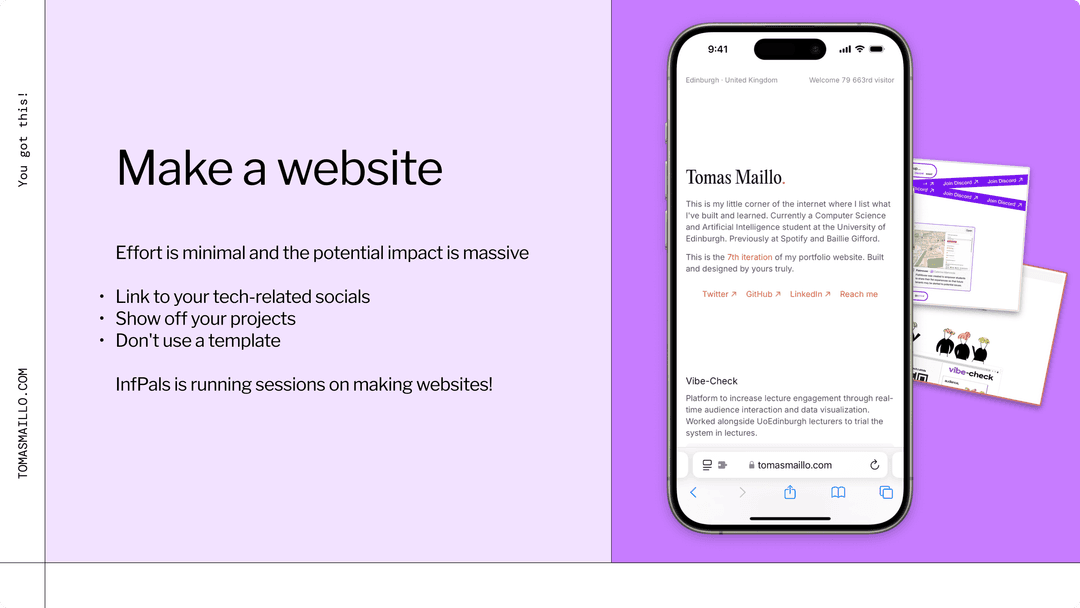
Creating a personal website takes relatively little effort but offers a huge return. There are few things that provide as much ROI as building your own site. You can set one up in less than an hour, and it will:
- Serve as a project you can discuss in interviews
- Make you more memorable to recruiters
- Help you stand out from candidates who don't have one
Even if you're aiming to be a back-end engineer, having a website is still worth it. It shows initiative and a willingness to step outside your comfort zone.
That said, avoid these common pitfalls:
- Don't use a template. Recruiters and hiring managers can spot templates easily, and they make you look generic. My manager at Spotify once mentioned that part of why they hired me was because my website clearly reflected my own work and personality.
- Don't plagiarise code. When hiring for Hack the Burgh 2025, I rejected a candidate who claimed to have built a GLSL particle simulation that was entirely copied from a tutorial. (Yes, I read the code and tracked down the original version.)
- Don't be generic. Your website is your chance to stand out. Show personality while staying professional.
If you're convinced but unsure where to start, try building something simple with HTML and JavaScript, then deploy it on Netlify.
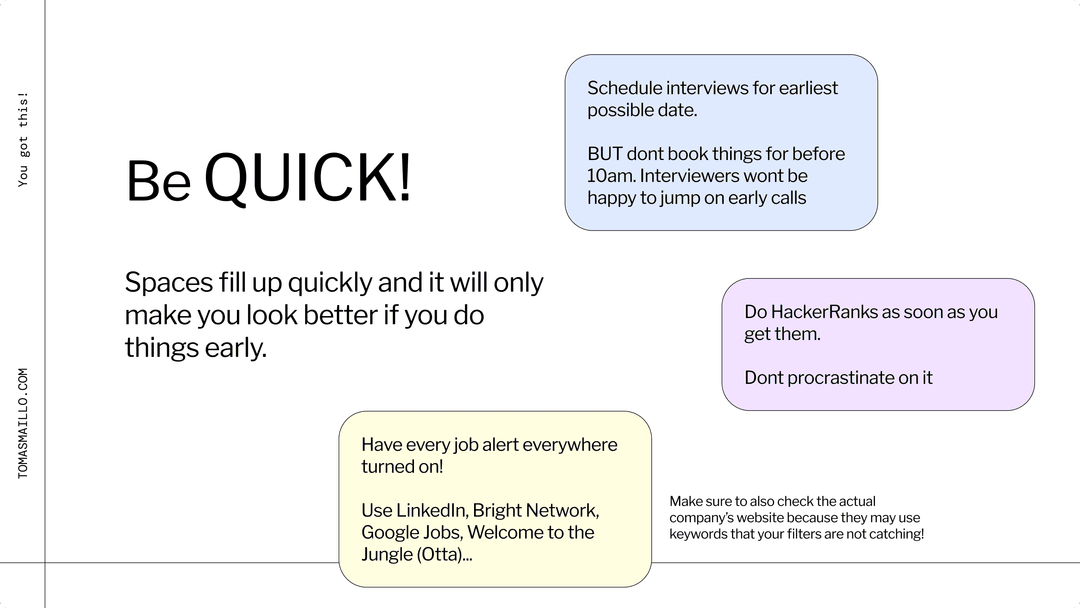
2. Be quick
Companies want to fill internship spots quickly to lock in strong candidates, so delaying applications or interviews can cost you.
The most memorable example for me was postponing a final-round interview by a week due to university deadlines. I performed well, but the last internship spot had already been filled. I was offered a spring week instead.
In hindsight, prioritising the interview over a slightly better university grade would likely have been the better decision.
3. Interviewers are your friends
It's easy to treat interviews like exams, but they're fundamentally different. Beyond technical ability, interviewers are assessing how you think and communicate, and whether they'd enjoy working with you.
Gayle Laakmann summarises this well in Cracking the Coding Interview:
'Despite the questions on polymorphism and heaps and virtual machines, the question interviewers really want an answer to is: Would I have a beer with this guy or gal?'
Interviewers are looking for someone they'd enjoy working with. Be yourself, be friendly, and show genuine enthusiasm.
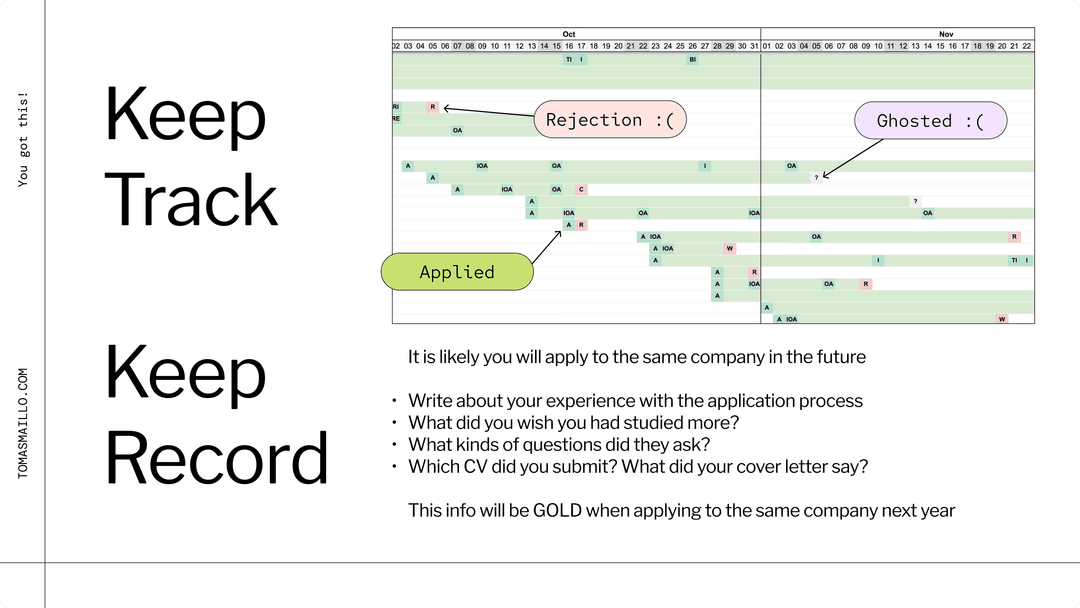
4. Log it all
Keeping track of your applications and interviews is incredibly useful. A simple spreadsheet or Gantt chart can go a long way. Log:
- Companies you've applied to
- Application dates
- Interview stages and outcomes
- Feedback received
After each interview, jot down notes about the questions, your responses, and anything you learned. These notes become invaluable when you (inevitably) apply to the same company again, help friends prepare, or spot patterns across companies.
5. Research, research, research
Corporate websites rarely show the full picture. Platforms like Reddit and Blind can offer candid insights from current and former employees. This helps you understand:
- Company culture and reputation
- Work-life balance and expectations
- Interview structure and role naming (some companies use surprisingly unclear titles)
I've personally changed my mind about applying to certain companies after reading honest accounts of their culture or interview processes.
You should also think about how you discover roles. LinkedIn works, but it's worth using more niche platforms like TopJobsToday or Welcome to the Jungle (Otta), which focus on fewer but better-matched opportunities.
Simple keyword filters often miss roles because companies use unusual titles. (This has burnt me in the past.)
Feeling stressed?
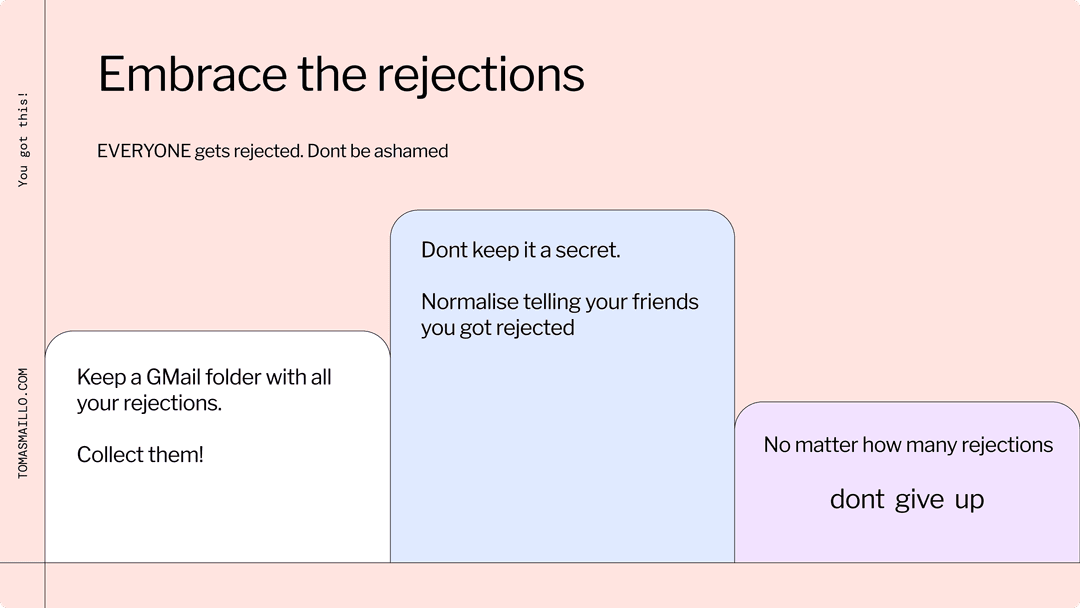
Feeling overwhelmed or worried about rejection? That's completely normal. Rejection is part of the process, and each rejection teaches you something.
Everyone around you, including people you admire, has faced rejection:
- Brian Acton was rejected by Facebook and Twitter before co-founding WhatsApp, which Facebook later acquired for $19 billion
- Saphira Crystal was rejected 11 times before joining RuPaul's Drag Race and becoming one of its strongest contestants
- Daniel Ek was rejected by Google before founding Spotify
- Lady Gaga was dropped by her first record label and faced months of rejection before releasing The Fame
- Personally, I've been rejected at least 57 times since starting university (and probably more that I haven't recorded). One of them was Stripe — my current employer — when I first applied as an intern
Try looking into your own idols' rejections. You'll quickly realise how universal this is.
But don't fall for survivorship bias.
You've got this!
Lastly, remember that first impressions matter. As Apple's philosophy 'Impute' says, people do judge a book by its cover, so make yours count.
Go apply. Best of luck.
Obsessively,
Tomas